When I walk into a space—be it a flagship retail store, a sprawling museum, or a newly renovated transit hub—my eyes immediately dart to the threshold. I am not looking for the architectural statement piece. I am looking for the transition. How does the space signal where I should go? How does it treat my time? Most designers fail here because they treat the entrance as a destination rather than a gateway.
In digital design, we often talk about "reward loops." It sounds like marketing jargon, but look past the phrase, and you find a simple mechanical truth: if you don’t give the user a reason to move to the next "zone," they will close the tab or walk out the door. We can learn a immense amount about physical wayfinding by looking at how platforms like mrq.com manage user attention through deliberate interface design and clear hierarchies of reward.
The Threshold: Why Digital UI is the New Lobby
A poorly designed website feels like a building with a revolving door that leads directly into a broom closet. You arrive, you’re confused, and you immediately search for an exit. Conversely, high-performing digital platforms use the landing page not as an advertisement, but as a map. They treat the user’s cognitive load as a finite resource.

Consider the way mrq.com organizes its landing experience. It doesn’t bury the user in a dense forest of text or a "hero image" that serves no functional purpose. It presents a clear, actionable hierarchy. The visual signals indicate exactly where the engagement begins. In physical architecture, we call this the "decision point." If a visitor enters a museum and doesn’t see the reception desk, the cloakroom, and the primary gallery entrance within three seconds, the space has failed. Digital platforms excel here because they have been forced to optimize for bounce rates; physical buildings often hide behind "aesthetic" choices that actively sabotage the visitor’s desire to proceed.
Decoding the Queue: Anticipation Design
I keep a running list of "good queues" and "bad queues." A bad queue is a black box—a line where you cannot see the end, where there is no progress indicator, and where the temperature is usually wrong. A good queue, however, builds anticipation design into the architecture itself.
Digital reward loops operate on a similar principle: the "loading bar" or the "level-up notification" is a physical boundary in digital space. Platforms like MrQ use these mechanics to keep the user engaged during moments of transition. They aren't just showing you a screen; they are rewarding you for the time spent waiting. Architects should take note. If you are designing a queue for a ticket office or a popular exhibition, don’t just put up stanchions. You need to provide visual waypoints that act as "levels" in a game. If the line is 20 minutes long, give the visitor three distinct sub-goals or visual transitions to mark their progress. It turns a stagnant line into an active, rewarded journey.
Parallel Mechanics: UI Zoning vs. Spatial Zoning
One of the most annoying habits in modern design is the overuse https://bizzmarkblog.com/architectural-clarity-applying-digital-ui-principles-to-physical-wayfinding/ of the term "immersive." If you have to tell me a space is immersive, you’ve already failed. Immersion is a byproduct of clarity. When I look at the layout of a clean digital interface, I see a masterclass in spatial zoning. Every icon has a purpose; every color signifies a state of engagement.
In a retail environment, we use zoning to guide the flow of the customer. In UI design, we use hierarchy to guide the click. They are the same problem. Look at the following comparison of strategies:
Feature Digital Strategy (e.g., MrQ) Physical Architecture Strategy Navigation Breadcrumbs and persistent menus. Visual sightlines and floor-plane changes. Reward Progress bars, badges, instant feedback. Milestones in a gallery, tiered views. Hierarchy Contrast, white space, active states. Lighting, material changes, thresholds. Engagement Variable reward loops (the "win"). Discovery-based circulation (the "find").When a website uses "white space" to isolate a call-to-action, they are doing exactly what an architect does when they clear a room of clutter to focus a visitor’s eye on a single sculpture. The digital UI is simply more aggressive about removing the "noise."
Narrative Pacing Through Circulation
Circulation should feel like a story. It needs a beginning, a rising action, a climax (the main experience), and a denouement (the gift shop or the exit). Too many buildings are designed as a series of disconnected, static rooms. This is like a website where every page refresh takes you to a completely different design system.
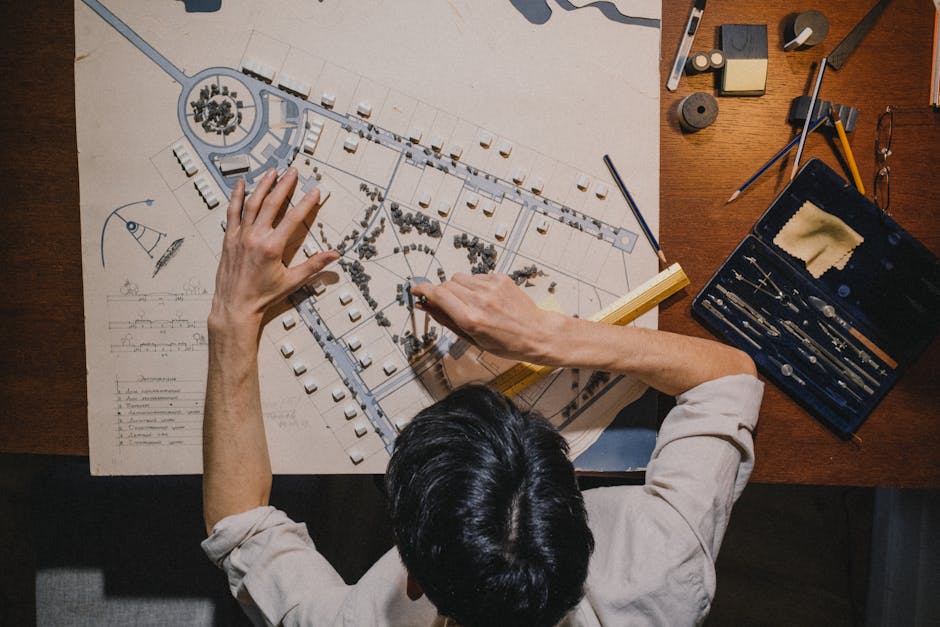
To fix this, designers must implement engagement mechanics that persist through the entire path of travel. In digital design, this is called "state management." The site remembers who you are and where you’ve been. In architecture, this is the consistent use of material, lighting temperature, or even scent. If a visitor moves from the lobby to the primary gallery, the transition should feel like a level-up, not a total reboot of the experience. We must design the "in-between" spaces as carefully as the main event.
The Problem with Passive Design
I often see architects and UX designers use passive voice to excuse bad decisions: "The visitor is expected to find their way," or "The interface is designed to be intuitive." This is a cop-out. You are responsible for the visitor’s movement. If they get lost, *you* lost them.
When platforms like MrQ design their user flows, they aren’t "hoping" the user finds the games. They are actively architecting the gaze of the user. They use color contrast to pull the eye. They use specific button shapes to signal the physical act of "pushing." They understand that the user is a human with a finite amount of patience, not a ghost drifting through a void. Architects need to stop designing for "the user experience" in the abstract and start designing for the human who is currently tired, slightly confused, and carrying a bag.
Clarity as the Ultimate Reward
The most satisfying reward you can give a visitor—whether they are on a laptop or walking through a museum—is clarity. We are bombarded with information. When a digital platform manages to strip away the clutter and present exactly what is needed at exactly the right time, that is a high-value interaction.
In physical spaces, this means:
Reduced Decision Fatigue: Limit the number of paths at a junction to three or fewer. Visual Cues: If a floor material changes, it should signal a change in function (e.g., from public passage to private browsing). Immediate Feedback: If a door is locked, make it obvious from five feet away, not when the visitor touches the handle.When you look at a site like mrq.com, you notice how they prioritize the "active" elements. They don't hide their core value proposition in a sub-menu of a sub-menu. They bring it to the foreground. We should do the same in our buildings. If the core purpose of a museum is the collection, stop putting the lobby shop in the most prominent position. Prioritize the transition to the primary experience.
Conclusion: The Convergence of Spaces
Architecture and digital UI are colliding. We now carry our "digital rooms" in our pockets, and we expect the physical world to be as responsive as our favorite apps. This isn't just about adding touchscreens to a wall; it’s about understanding that human behavior is consistent across media. Whether you are scrolling through a lobby of digital games or walking through the lobby of a physical museum, you want the same three things: to know where you are, to know what you can do, and to feel that your time is being spent in a way that provides value.
Next time you walk through a door, pay attention to the transition. Is it clear? Does it lead you somewhere, or does it just stop? If the architect had spent half as much https://dlf-ne.org/how-do-you-design-emotional-connection-into-a-building/ time obsessing over the "reward" of entering that space as a digital UI team spends on a "sign-up" flow, we might find ourselves in a much more legible world.
Design is not about "improving the aesthetic." It is about managing the flow of human attention. If you can master that, the rest of the building will take care of itself.