If you have spent any time scrolling through tech news, gaming forums, or listening to people talk about the "future of the industry," you have heard the term cloud gaming thrown around like it’s the second coming of the console wars. But as someone who balances a job, three kids who constantly want to steal my controller, and a genuine passion for tech, I find that most of these conversations miss the point. They talk about teraflops and latency as if we are all competitive professionals aiming for the pro circuit—which, frankly, is the last thing on the mind of a normal player.
So, let’s peel back the curtain. What is this technology, why is it suddenly everywhere, and—most importantly—what does this change for the normal, everyday player?
The "What": A Simple Breakdown
At its core, "cloud gaming" is essentially remote rendering. Imagine watching a movie on a streaming service. You aren't downloading the file to your computer; the data is being processed on a server farm somewhere else, and you are just viewing the pixels as they are beamed to your screen. Cloud gaming does the exact same thing, but with a massive technical hurdle: it has to be interactive.
When you press "A" to jump, that signal has to travel to the server, the server has to register the input, render the frame of the game, and send the video back to your device—all in a fraction of a second. It is a massive technological achievement, but for the average person, it’s just a way to play high-end games on devices that aren't actually capable of running them natively. No massive storage requirements, no hefty hardware upgrades, and no waiting for a 100GB update to install after a long day of work.
Gaming as the New Social Connection
One of the biggest reasons this topic keeps coming up is that gaming has shifted from a solitary activity to a primary social platform. For my generation, social connection meant going to the park. For my kids and their friends, it means hopping into a voice channel, syncing up their schedules, and playing together regardless of where they are.
This social aspect is supported heavily by community-based platforms like Discord. These apps have become the "living rooms" of the modern era. When you combine the accessibility of cloud gaming—where a friend can join a game from a tablet or an old laptop—with the communication features of these community platforms, the barrier to entry vanishes. You no longer need to convince your friend to spend $500 on a console just to play together on a Friday night; they can jump in from their browser. That is a massive shift in how communities are built.
The Accessibility Factor: Why It Actually Matters
When I talk about gaming accessibility, I am not talking about corporate buzzwords or "empowering global audiences." I am talking about the parent who has $200 for a device instead of $1,000, or the student who relies on an aging laptop provided by their school.
Cloud gaming services provide a bridge for those demographics. By offloading the "heavy lifting" to a massive server room, the local hardware becomes less relevant. As long as you have a stable internet connection, the "platform ecosystem" you choose doesn't have to be a top-of-the-line desktop. This democratizes the hobby in a way that feels tangible. It’s no longer just for the hardware enthusiasts; it’s for anyone with a decent screen and a decent connection.
Comparing the Experiences
To really understand if this is worth your time, it helps to look at the trade-offs. I’ve put together a quick breakdown of how these play styles differ for a regular person:
Feature Traditional Hardware Cloud-Based Gaming Upfront Cost High (Console/PC) Low (Existing Device) Setup Time High (Downloads/Updates) Instant (Load and Play) Performance Reliably Local Depends on ISP Stability Portability Low High (Any Screen)What Does This Change for Normal Players?
I always ask this question because I don't want to get lost in the hype. Does this change how I play? Yes. On nights when I’m too tired to boot up my full rig, I can pick up a mobile device or a small streaming box and jump into a session for thirty minutes. It reduces the "friction" of gaming.

However, it does come with a caveat. Because I track my sleep quality (I keep a running note of my Oura data versus my late-night sessions to see how blue light and excitement affect my recovery), I’ve noticed that the "instant-on" nature of cloud gaming makes it way too easy to lose track of time. It’s so convenient that https://highstylife.com/beyond-the-high-score-how-livestream-chats-are-rewiring-gaming/ there is no natural "break" provided by a loading screen or a long install process. If you’re a parent like me, that means you need to be twice as diligent about setting your own hard stop times.
Also, keep in mind that cloud gaming relies entirely on your ISP. If your home network is jittery, you’re going to have a bad time. There is no amount of "cloud power" that can fix a bad Wi-Fi signal in the back bedroom. Before you dive in, consider if your local infrastructure can actually support it.
The Verdict: Why the Hype?
The reason this keeps coming up in culture and tech blogs is that it fundamentally changes who can be a "gamer." We are moving toward a world where your access to a game is no longer dictated by the brand of Browse this site box under your TV. It is dictated by the strength of your data connection.
As someone who enjoys gadgets, I’m a fan of the *convenience*. But I also think we need to stay grounded. Don't let the marketing convince you that local hardware is dead—there is still a massive difference in input latency and visual fidelity for serious, competitive, or atmospheric gaming. Use the cloud for what it’s best at: quick sessions, playing with friends on different devices, and trying out games without the commitment of a massive download.
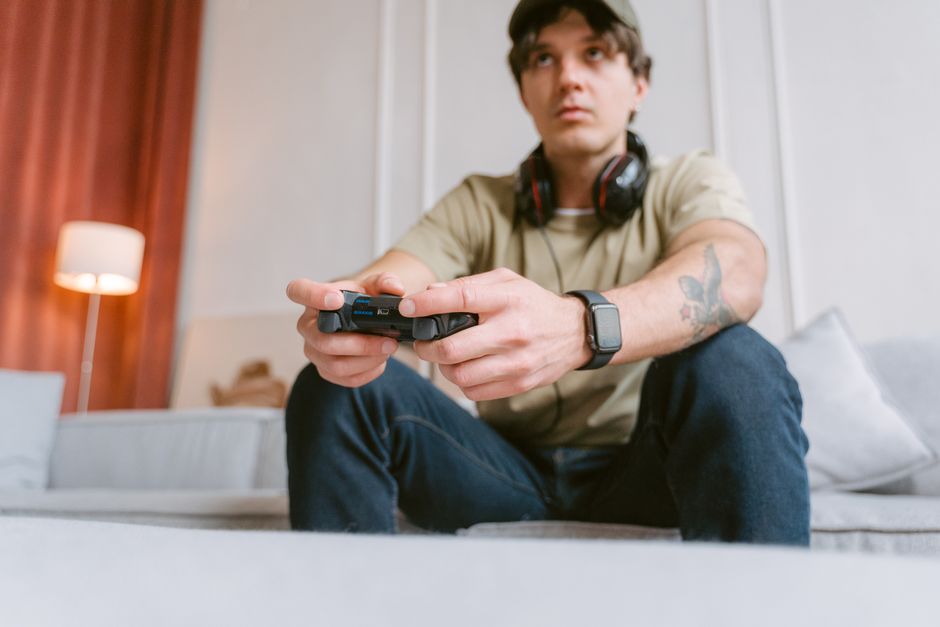
Ultimately, it’s just another tool in our kit. Whether you’re playing on a high-end desktop or streaming from the cloud while hiding in the kitchen to get five minutes of peace from the kids, the value is still in the experience, not the method of delivery.
Note: As a hobbyist tester, I’ve tracked my sleep metrics for the last two years. I’ve observed that playing high-stimulus games within 60 minutes of sleep reliably drops my HRV (Heart Rate Variability) by 10-15%. While clinicians generally suggest a "wind-down" period, there is no standardized "gaming health regulation" for how these services should be used. Use your own judgment and keep an eye on your rest!